
Why do I look weird on camera?
In this article
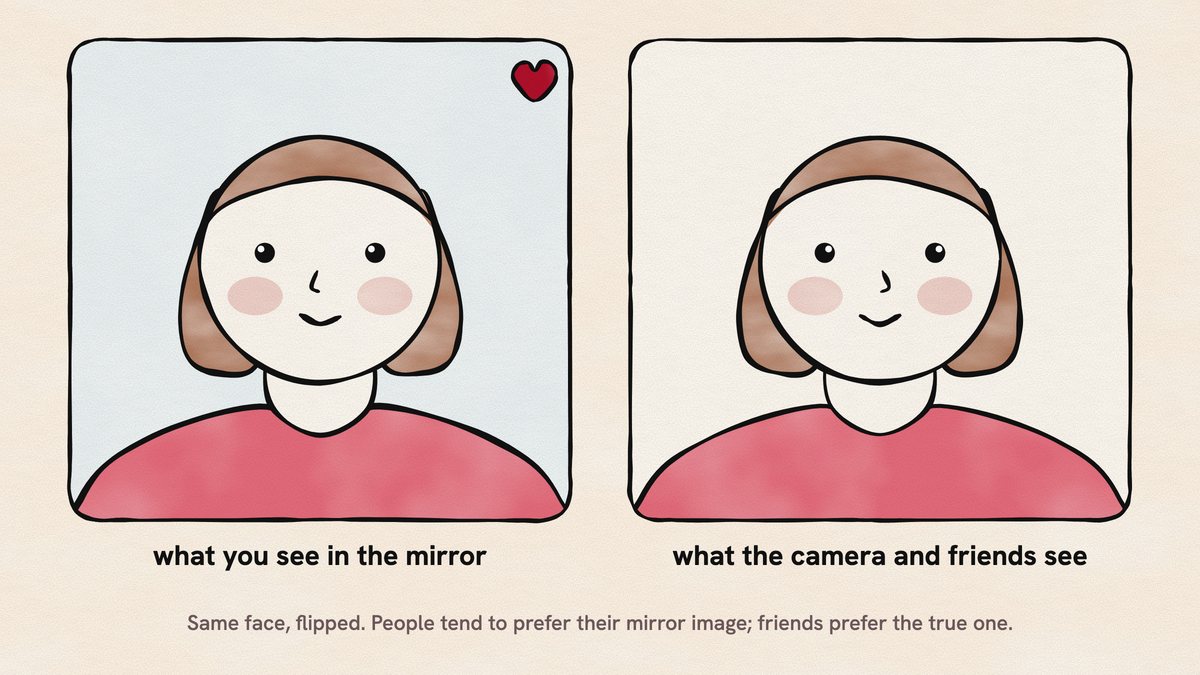
In 1977, three psychologists printed a single frontal photo of each person in their study twice: once the normal way and once flipped left to right. They asked each person which print they preferred, and then asked a friend or partner the same question 1.
People reliably preferred the flipped print, the version they knew from the mirror. Their friends and partners leaned the other way and preferred the true image, the version they saw across the table 1.
That finding explains a lot of the discomfort of seeing yourself on camera. The face in the video is the face everyone else knows. It just isn't the one you know.
Why do I look different on camera than in the mirror?
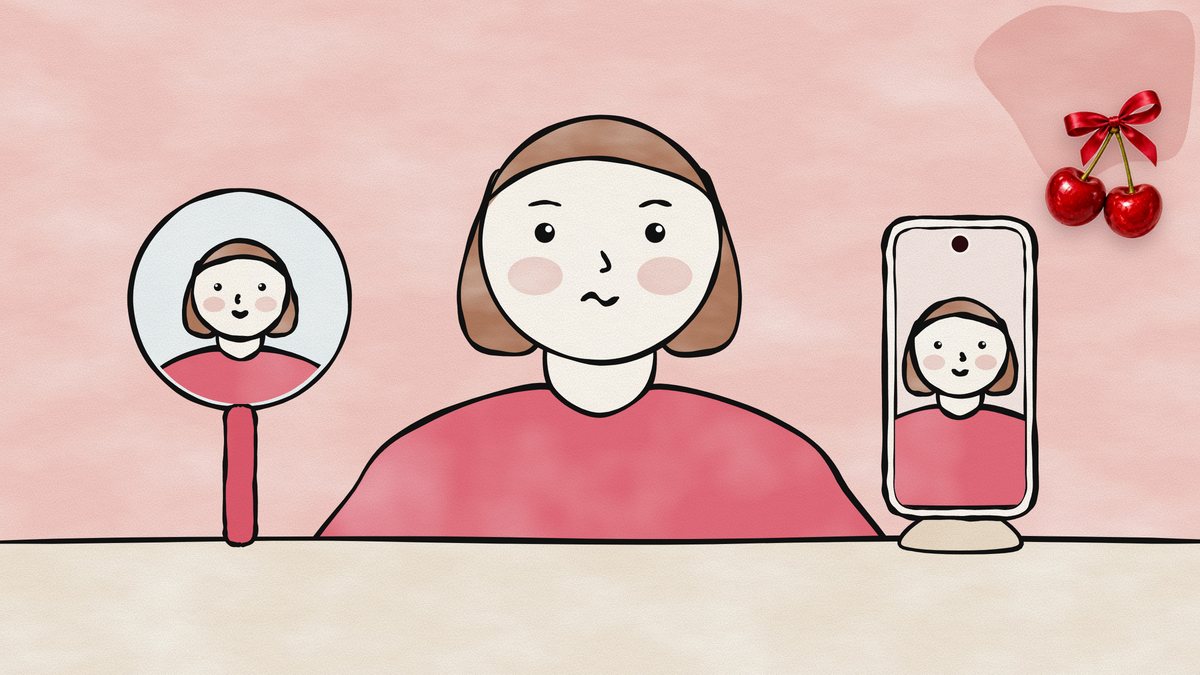
The mirror shows you a reversed face, and you've seen that version far more than any other. Faces aren't perfectly symmetrical, so flipping one changes it a little: a parting on the other side, a smile that lifts higher on one side, an eyebrow that sits a little higher.
The 1977 study tested this idea, known as the mere-exposure effect: we tend to like what we've seen more often 1. A 2024 study came to the same place with modern photos. People rated unflipped photos of themselves as more "unlike" themselves and less pleasant than flipped ones 2. With photos of close friends the pattern disappeared, because for a friend the unflipped face is the familiar one 2. The first experiment was repeated seven years later with the same result 2.
The researchers put it down to "a strong, albeit malleable, visual representation of self" 2. Malleable is the useful word there. The picture you hold of your own face may shift with what you see.
Why do I look weird on my front camera?
Distance is the other big reason, and it's the easier one to fix. When a lens is close to your face, the parts nearest to it (nose, middle of the face) are much closer than the parts farther away (ears, jaw), so they come out relatively larger.
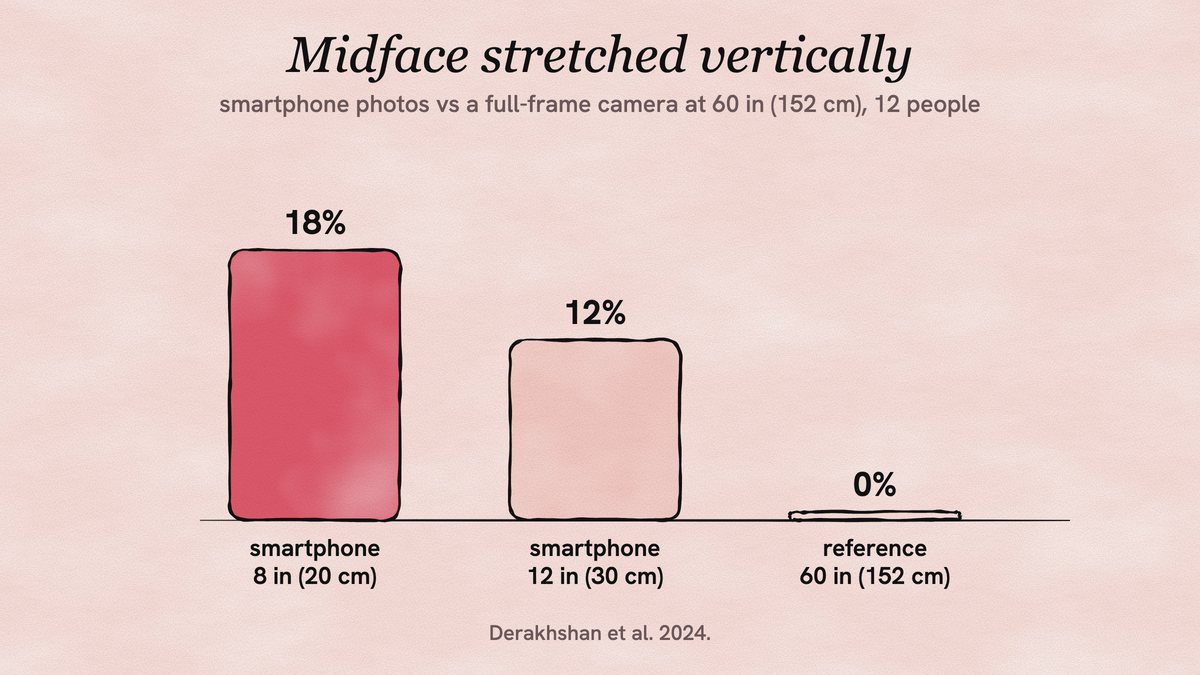
A 2024 study measured this. Twelve people were photographed head-on at six distances with a smartphone and with a full-frame camera, and every photo was compared against a full-frame photo taken from 60 inches 3. With the smartphone, the middle of the face was stretched vertically by 18% at 8 inches and by 12% at 12 inches 3. The full-frame camera at 8 inches gave 12% to 19% depending on the lens 3. Both distortions came at what the authors call "selfie" distances 3.
An earlier paper in the same field built a mathematical model of selfies and used it to show that the nose looks bigger in short-distance photos 4. We could read only its summary, so we leave its numbers out.
Does camera distance change how other people see you?
It seems to, though people don't notice why. In a 2012 study, each face was photographed twice at the same moment, from 45 cm and from 135 cm 5. Viewers rated the close-up photos lower for trustworthiness, competence and attractiveness, and invested less money in those people in a trust game 5. In the first two experiments, none of the participants noticed that the distance had been changed 5.
Those viewers were judging strangers' faces, so it isn't a study of how you see yourself. It does suggest that a phone held close to your face can cost you a little in how trustworthy and capable you come across, which is good news, because it's the easiest thing in this post to change.
Why do I hate how I look on camera?
If you dislike yourself on video, start with this: two of the reasons above have nothing to do with how you look: you're seeing the unfamiliar, unflipped version of your face, and a close lens may be stretching it.
There's a third. A 2016 study found that people aren't very good at picking which photos look most like them. Strangers who had seen a face only briefly chose photos that were more accurately matched to that person than the photos people picked of themselves 6. The authors suggest that "inaccurate representations of self" get in the way 6.
So when a video feels wrong, it may be your sense of your own face that's out of date. The camera is showing the version everyone else already knows, and in the 1977 study, friends and partners preferred it 1.
How can I look more like myself on camera?
These tips come from filming practice, not from the studies, except where noted.
- Move the phone back. In the 2024 study, distortion appeared with the smartphone at 8 and 12 inches 3. Put the phone on a stand an arm's length away or more and frame from the chest up. If your phone has a 2x lens, step back a little further and try it.
- Put the lens at eye level. A camera below your chin looks up your nose and makes the jaw the nearest thing to the lens. Stack books under the stand until the lens is level with your eyes.
- Face the light. Sit facing a window, with the light falling on you from in front or slightly to one side. A light behind you turns you into a silhouette.
- Check the flip setting. On iPhone, Settings, Camera, Mirror Front Camera saves front-camera photos the way the preview shows them. Mirrored looks like the you that you know; unmirrored looks like the you others see. Text in the shot will read backwards when mirrored.
- Give it a week. If familiarity drives the preference 1, watching your true image more often should make it feel more like you. We found no study that tested this over time, so treat it as a reasonable guess.
A setup with the phone on a stand at eye level also suits reading from a script. YapPlease puts the script right next to the lens, so you can stand back and still see your words.
Common questions
Is the camera or the mirror more accurate?
Both are accurate in different ways. The mirror is reversed left to right, and a camera, set to not mirror, shows your face the way others see it. In a 1977 study, people preferred their mirror image, while their friends and partners preferred the true image 1. A close lens also adds stretching: 18% in the middle of the face at 8 inches with a smartphone, in a study of 12 people 3.
Why do I look better in the mirror than in photos?
Probably because you've seen the mirror version far more. In a 2024 study, people rated unflipped photos of themselves as more unlike themselves and less pleasant than flipped ones, and the pattern disappeared for photos of close friends 2.
Do selfies distort your face?
At short distances, yes. In a study of 12 people, a smartphone stretched the middle of the face vertically by 18% at 8 inches and 12% at 12 inches, compared with a photo from 60 inches 3. Moving the phone back, onto a stand, is the simplest fix.
Why do I look so different on Zoom or FaceTime?
The same two things apply on video calls: the preview often shows you mirrored, and a laptop or phone sits close to your face, usually below eye level. In a 2012 study, viewers rated faces photographed from 45 cm as less trustworthy and competent than the same faces photographed from 135 cm 5. Raising the camera to eye level and sitting back helps.
Sources
- Mita TH, Dermer M, Knight J (1977). Reversed facial images and the mere-exposure hypothesis. Journal of Personality and Social Psychology 35(8):597-601. Not indexed in PubMed. DOI
- Suchow J, McDowell M, Huang J, Haberman J (2024). A reflection on faces seen under mirror reversal. Perception 53(11-12):763-774. PubMed
- Derakhshan A, Gadkaree SK, Barbarite ER, Lindeborg MM, Bhama PK, Shaye DA (2024). Quantifying facial distortion in modern digital photography. Laryngoscope 134(3):1234-1238. PubMed
- Ward B, Ward M, Fried O, Paskhover B (2018). Nasal distortion in short-distance photographs: the selfie effect. JAMA Facial Plastic Surgery 20(4):333-335. PubMed
- Bryan R, Perona P, Adolphs R (2012). Perspective distortion from interpersonal distance is an implicit visual cue for social judgments of faces. PLoS One 7(9):e45301. PubMed
- White D, Burton AL, Kemp RI (2016). Not looking yourself: The cost of self-selecting photographs for identity verification. British Journal of Psychology 107(2):359-373. PubMed
Keep reading
How to be confident on camera
You look calmer than you feel. What speaking research says about nerves, "get excited" self-talk and practice, and steps to try before your next take.
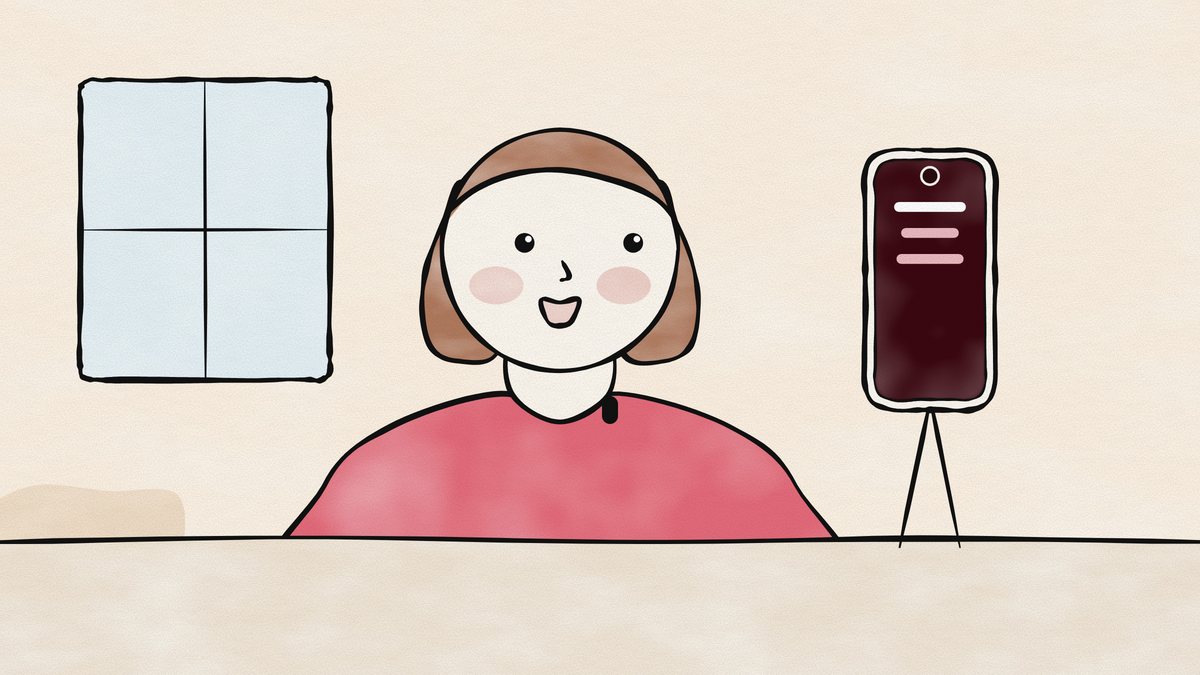
Talking head video setup on an iPhone
Sound first, then phone height, distance, window light, framing and takes. A simple talking head setup with the research that exists behind it.
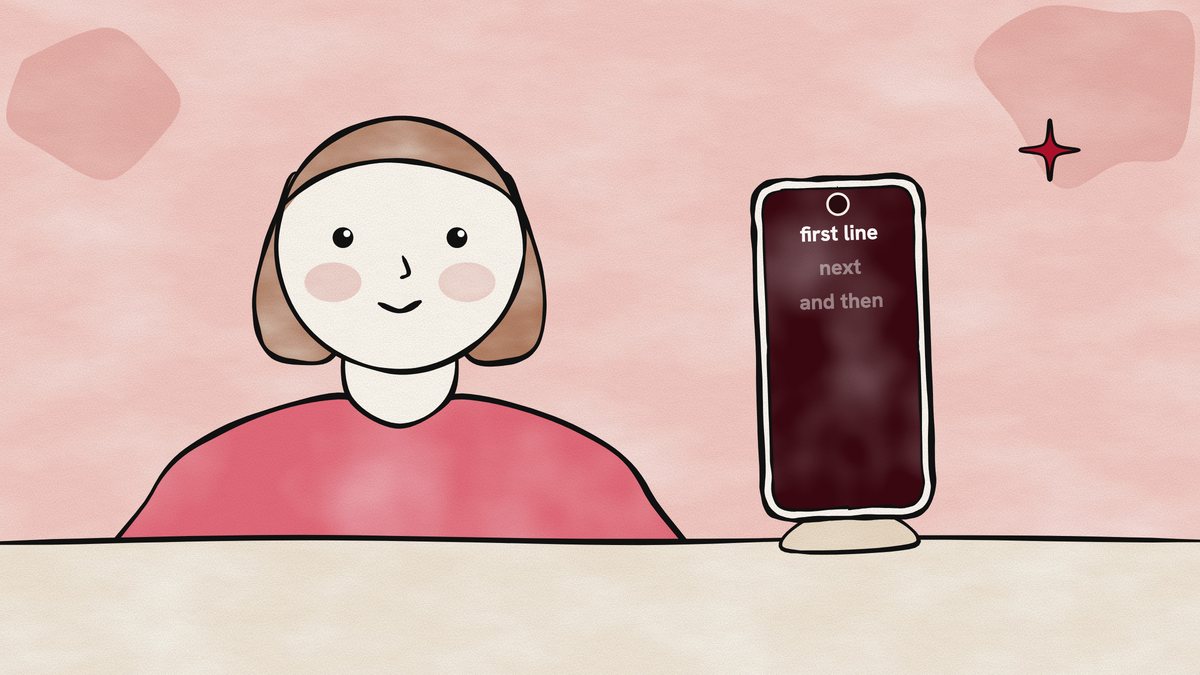
How to look at the camera while reading a script
Gaze studies say eye contact survives a few degrees off the lens. Here is how that turns into centimetres on your phone, and where to put the words.